Ask ten people where to buy property in Israel, and you'll get ten answers built on almost no shared logic, a cousin's recommendation, a headline about prices doubling, a neighborhood that felt right on a two-day trip. That's not how capital should move, and it's not how we advise clients to think about it.
Israel's residential market isn't one market. It's four distinct investment cases stacked on top of one small country, each with its own buyer profile, its own risk-return math, and its own reason to exist in a portfolio. Tel Aviv is a wealth-preservation play with a scarcity premium. Jerusalem is a slower, steadier asset carried by structural demand that doesn't move with the news cycle. Herzliya is a concentrated bet on Israel's tech economy, priced accordingly. And a set of emerging cities offer the yield and upside that none of the first three can, in exchange for patience.
None of these is the "best" city. Each is the right answer to a different question. This article will walk through all four, what actually drives each market, who each one suits, what things cost today, and where we're currently seeing the more interesting entry points, so you can work out which thesis, if any, matches what you're actually trying to accomplish.
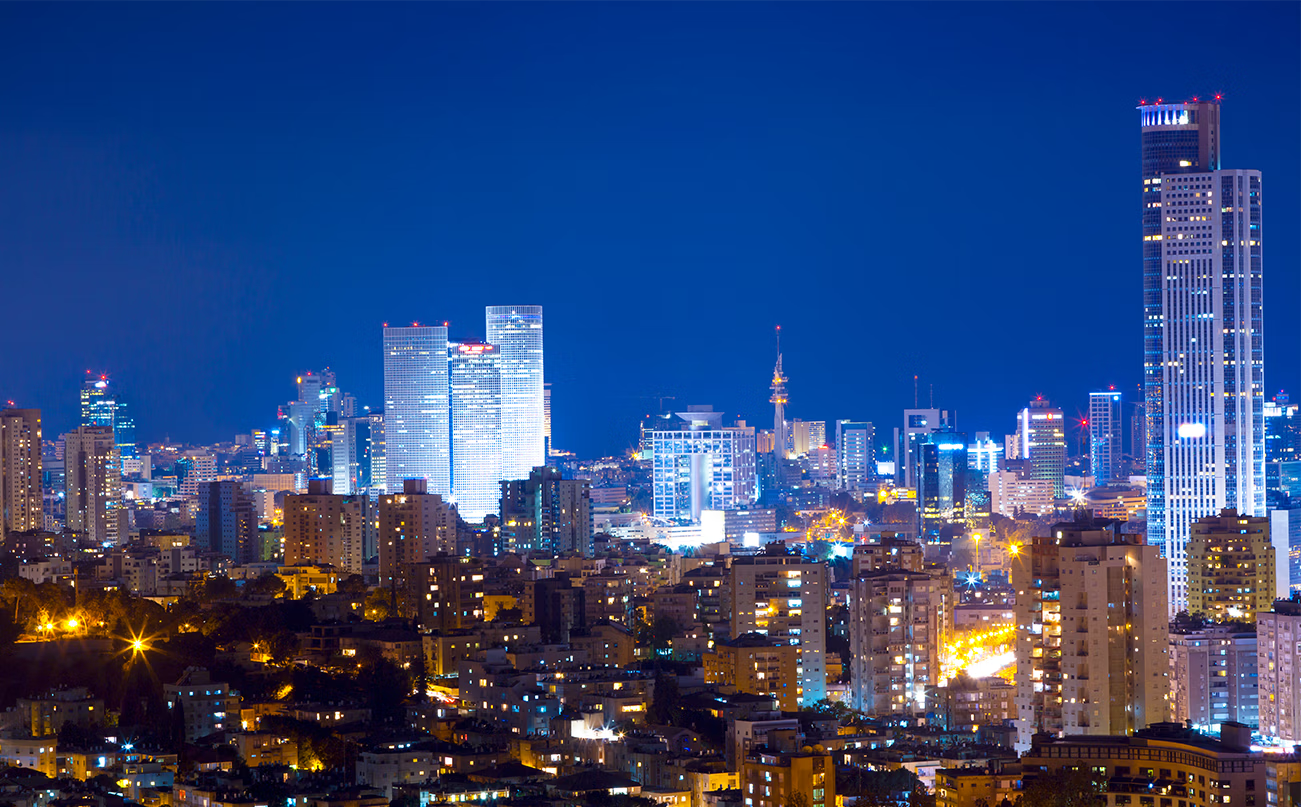
The thesis: Tel Aviv is Israel's only genuinely global city, the country's economic center, its densest concentration of high-tech employment, and the market with the deepest liquidity by a wide margin. The investment case here isn't yield. It's scarcity: a small, geographically constrained city with essentially no room to expand, competing for space against the highest-earning population in the country. That combination has produced one of the more resilient property markets in the developed world, even through periods, like the last two years, of higher interest rates, war, and reduced transaction volume.
Market dynamics: After a slower 2023–2024, early signs of recovery are visible: a Bank of Israel rate cut in January 2026 has improved mortgage affordability, and properties are currently transacting 2–6% below asking price in many segments, real negotiating room by Tel Aviv's normal standards. Rental vacancy citywide sits at just 2–3%, and premium-segment rents have grown 4–7% year over year, which tells you the demand side of the equation hasn't gone anywhere even while buyer sentiment cooled.
Asset types: The city splits cleanly into three tiers. Mainstream stock, older walk-ups and mid-market buildings across most neighborhoods, trades in the ₪50,000–70,000 per square meter range and is where most rental-yield-focused buyers operate. Prime addresses (Rothschild Boulevard and Lev Ha'ir, Old North, the beachfront) run ₪70,000–120,000+ per square meter and behave as a blue-chip, low-volatility asset class more than a rental play. Ultra-luxury towers and sea-view penthouses push past ₪150,000–200,000 per square meter and are driven almost entirely by international capital rather than local wage growth.
Who this suits: Buyers prioritizing capital preservation and liquidity over cash yield; investors who want the option to sell quickly if circumstances change; and anyone for whom "owning in Israel's flagship city" carries value beyond the spreadsheet. It suits a five-to-ten-year hold horizon better than a two-year flip.
Price benchmarks: The citywide average sits around ₪60,000–65,000 per square meter, with a median apartment price near ₪3.8 million (roughly $1.2 million). Add 9–13% on top for purchase tax, legal fees, and bank costs as a foreign or investor buyer, a figure people consistently underestimate when budgeting.
The honest risk: Gross rental yields in Tel Aviv run 2.5–4.5%, among the lowest in the country, so this is not the market to enter chasing income. Price-to-income ratios here run 12–15 times median household earnings, well above most comparable global cities, which means the appreciation case depends on continued scarcity holding, a reasonable bet, but not a guaranteed one, and not one that responds quickly if you need to exit on a specific timeline.
Current opportunity: The clearest value play right now is in transitional neighborhoods just outside the prime core, Florentin and parts of south Tel Aviv, where apartments trade at a fraction of Rothschild or Neve Tzedek pricing but sit adjacent to the gentrification wave that already reshaped those streets two decades ago. It's a longer, higher-conviction hold than buying in an established prime pocket, and it should be underwritten as such.
The thesis: Jerusalem doesn't behave like a normal real estate market, and that's precisely its appeal to a certain kind of investor. Demand here is driven less by speculation than by three durable, largely news-cycle-independent forces: a permanent flow of diaspora buyers (a meaningful share of purchases in the Anglo and Francophone neighborhoods), constant institutional and student housing demand tied to the city's universities and yeshivot, and its status as the seat of government and a UNESCO-dense historic core that will never see meaningful new supply. The result is a market that rarely spikes and, more importantly, rarely falls, appreciation here is a slow, compounding story rather than a cyclical one.
Market dynamics: Jerusalem's rental yields, at 3–4% gross, run modestly ahead of Tel Aviv's, and price growth has been comparatively unglamorous but consistent. The city's fast rail connection to Tel Aviv (roughly 30 minutes) has also started pulling in buyers who work in the Tel Aviv economy but want Jerusalem's slower pace and lower entry price, a trend that should be watched over the next several years.
Asset types: Jerusalem's geography does more work than in almost any other Israeli city: a four-room apartment can run anywhere from roughly ₪2.5 million to ₪5.5 million depending entirely on neighborhood. Rechavia and Talbiyeh sit at the top for prestige and diplomatic-adjacent demand. Baka, the German Colony, and Katamon carry the strongest Anglo and Francophone community infrastructure and the steadiest resale liquidity among overseas buyers. Har Homa, Pisgat Ze'ev, and similar newer-build peripheral neighborhoods offer the most accessible entry point, with newer construction and a different, more price-sensitive buyer base.
Who this suits: Investors and future olim who value predictability over upside, who want a property that will still be a sensible asset regardless of what happens with interest rates or the broader Israeli economy, and buyers for whom the neighborhood's religious and cultural character (Jerusalem's neighborhoods vary meaningfully in this respect, block to block) matters as much as the numbers.
Price benchmarks: Expect ₪2.5–5.5 million for a standard four-room apartment, with the gap between Har Homa and Rechavia running to more than double. Rental yields of 3–4% are supported by consistent student and diaspora demand rather than any single economic driver, which is exactly why they hold up when other things don't.
The honest risk: Slow and steady cuts both ways, Jerusalem is a poor market for anyone who needs a fast exit or a quick flip, and its resale liquidity, while real, is thinner than Tel Aviv's. Neighborhood selection also matters more here than almost anywhere else in the country: character, community, and price can shift meaningfully within a few blocks, and a buyer working from listing photographs alone is at real risk of misjudging a street.
Current opportunity: Nahlaot and parts of the city center offer character-building stock at prices still well under the established Anglo neighborhoods, with genuine walkability and gentrification already underway, a comparable value case to Florentin in Tel Aviv, at a lower absolute price point.
The thesis: Herzliya is not a diversified real estate market, it's a leveraged bet on one thing: the continued strength and geographic concentration of Israel's technology sector. Herzliya Pituach alone hosts the Israeli headquarters of Google, Microsoft, Apple, SAP, Amazon, and a dense cluster of scale-ups and venture-backed firms, all within walking distance of a marina, five-star hotels, and a Mediterranean beachfront. The buyer profile, tech executives on international rotation, founders, diplomats, is narrower and wealthier than any other market on this list, and the asset prices accordingly.
Market dynamics: The city functions as two almost entirely separate markets. Herzliya Pituach's villa and sea-view apartment segment is thin, high-priced, and moves on international capital flows and executive relocation cycles rather than local wage growth. Central and eastern Herzliya is a normal, functional Israeli residential market, still commanding a premium over comparable towns but priced for actual residents rather than global capital.
Asset types: In Herzliya Pituach, villas run ₪8–30 million and up, with the very top of the market (waterfront estates, architect-designed builds) reaching ₪60 million or more; sea-view apartments and penthouses typically run ₪5–20 million. In the rest of the city, standard four-room apartments trade between roughly ₪2.5 and ₪4.5 million, a completely different, far more accessible market than Pituach's headline numbers suggest.
Who this suits: Investors specifically underwriting a bet on Israeli tech's durability, buyers who want a lifestyle asset near the industry's physical center of gravity, and anyone for whom "supply is fixed and demand is a rotating population of well-compensated executives" is an appealing, if narrow, thesis. It's a poor fit for investors who need broad liquidity or a diversified entry point.
Price benchmarks: Gross rental yields run 2.5% in Pituach up to about 3.5% in central Herzliya, some of the lowest in the country, which is the direct cost of buying into concentration and prestige rather than cash flow.
The honest risk: This is the most concentrated thesis of the four, in every sense: geographically, economically, and by buyer type. A meaningful slowdown in Israeli tech, in foreign executive relocation, or in the specific companies anchoring Herzliya Pituach's tenant base would hit this market harder and faster than any other on this list. The villa segment in particular is thinly traded, a handful of transactions a year at the top end, which means pricing benchmarks are less reliable, and exit timing is less predictable than in a deeper market like Tel Aviv.
Current opportunity: Central Herzliya, away from the Pituach premium but still inside the same school districts, transit access, and proximity to the tech park, offers better yield than Pituach with most of the same underlying demand drivers meaningfully, and is where we're currently steering clients who like the Herzliya thesis but want a less concentrated entry point.
The thesis: Every established Israeli market above has been priced, in part, for its own maturity. The emerging markets, principally Haifa and Beer Sheva, with smaller cases to be made in cities like Ashkelon and parts of the Negev and Galilee periphery, offer the inverse trade: real, structural growth drivers (a university, a hospital system, a port, a tech spillover from the center of the country) at a fraction of the entry price, with correspondingly higher yield and a longer runway for appreciation. This is the highest-conviction, highest-effort thesis of the four: it requires believing in a specific city's trajectory rather than riding an already-established one.
Market dynamics: Haifa, Israel's third city, has posted some of the country's steadier growth over the past decade, roughly 30% price appreciation over ten years, with transaction volume up over 14% year-on-year in early 2025 and average prices climbing high single digits annually. It's anchored by the Technion, the University of Haifa, a major port, and a growing high-tech spillover from the center of the country, and it currently trades at roughly a third of Tel Aviv's per-square-meter price. Beer Sheva, the Negev's capital, is anchored by Ben Gurion University's 20,000 students and a growing medical and tech corridor, with some of the highest rental yields of any Israeli city.
Asset types: In Haifa, a four-room apartment runs ₪1.8–3.5 million, with Carmel Center at the top of that range and Hadar, a historic, gentrifying central neighborhood, with entry points from around ₪1.6 million with real capital-appreciation upside as renovation continues. In Beer Sheva, four-room apartments run as low as ₪1–1.8 million, with the newer Vav and Daled neighborhoods offering modern stock and the Old City offering low-cost, high-character renovation plays.
Who this suits: Yield-focused investors comfortable trading some liquidity and brand-name recognition for materially better cash-on-cash returns; buyers with a longer time horizon willing to underwrite a specific city's growth thesis rather than lean on an already-proven one; and investors building a diversified Israeli portfolio who want genuine geographic and economic spread rather than four properties that all move on the same Tel Aviv-adjacent variables.
Price benchmarks: Haifa's price per square meter runs roughly ₪15,000–28,000 with gross yields of 4–6%. Beer Sheva runs similarly low on entry price with yields in the 5–6% range, among the highest of any major Israeli city, driven by dependable student and institutional rental demand.
The honest risk: This is where diligence matters most and where the least experienced buyers get hurt. Resale liquidity is genuinely thinner than in Tel Aviv, Jerusalem, or Herzliya, you may hold longer than planned if you need to exit. Neighborhood-level variance is significant and less mapped by international buyers, which means local, on-the-ground verification matters more here than anywhere else on this list. And the growth thesis for any given emerging city is a bet on a specific set of institutions and employers continuing to expand, a university, a hospital, a tech campus, rather than a diversified economic base, which is a real and specific risk to underwrite rather than assume away.
Current opportunity: Haifa's Hadar neighborhood, Bauhaus architecture, genuine gentrification already underway, prices still well under Carmel Center, is currently the most interesting risk-adjusted entry point we're tracking in the emerging-market tier, alongside select new-construction projects in Beer Sheva's northern neighborhoods for investors prioritizing yield over character.
The question we ask every client before discussing a single listing isn't "which of these cities do you like best." It's "what is this property actually for,” capital preservation, income, a concentrated growth bet, or a home that happens to also be an asset. Each of the four markets above answers a different version of that question well, and answers the other three questions poorly. The mistake we see most often isn't choosing the wrong city outright, it's choosing a city that matches an emotional preference while quietly needing it to also deliver on a financial objective it was never built to serve.
On pure gross yield, Beer Sheva and Haifa lead the country at roughly 4–6%, compared with 2.5–4.5% in Tel Aviv and 2.5–3.5% in Herzliya. Higher yield comes with thinner resale liquidity and a growth thesis tied to a narrower set of local institutions, so it isn't a straightforward upgrade, it's a different trade-off, not a better one.
Herzliya Pituach, yes, villas start around ₪8 million and the top end runs well past ₪30 million. Central and eastern Herzliya is a different, far more accessible market, with standard apartments in the ₪2.5–4.5 million range, still benefiting from proximity to the tech park without Pituach's price tag.
There isn't a universal answer, it depends on whether you're optimizing for liquidity, yield, stability, or a specific growth thesis. Buyers newer to the market often do better starting with Jerusalem or mainstream Tel Aviv, where resale liquidity and comparables are deepest, and treating an emerging-market purchase as a second, more deliberate move once you've been through one transaction.
Not inherently, but they demand more diligence, not less. The trade-off is real: better yield and lower entry price in exchange for a longer likely hold period and less mapped neighborhood-level variance. That's a reasonable trade for the right investor and time horizon, it's% nationally in the past decade even through multiple periods of political and security disruption. Waiting for a broad correction has generally been a weaker strategy than finding the right asset within the market you've chosen, though that's a different question from whether a specific property a poor one for anyone who might need to exit on short notice.
Israeli residential prices have historically been far more resistant to sustained declines than most global markets, rising over 60% nationally in the past decade even through multiple periods of political and security disruption. Waiting for a broad correction has generally been a weaker strategy than finding the right asset within the market you've chosen, though that's a different question from whether a specific property is fairly priced today, which is worth scrutinizing regardless.