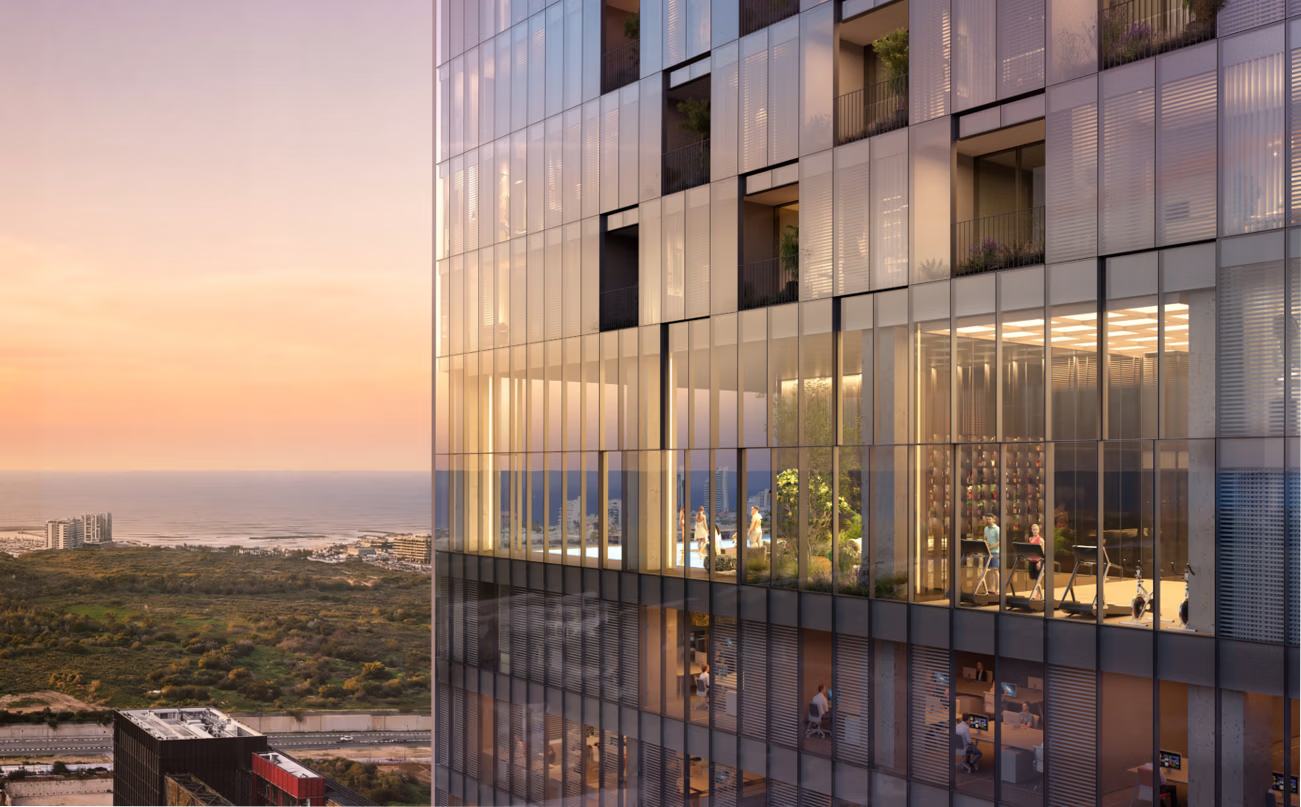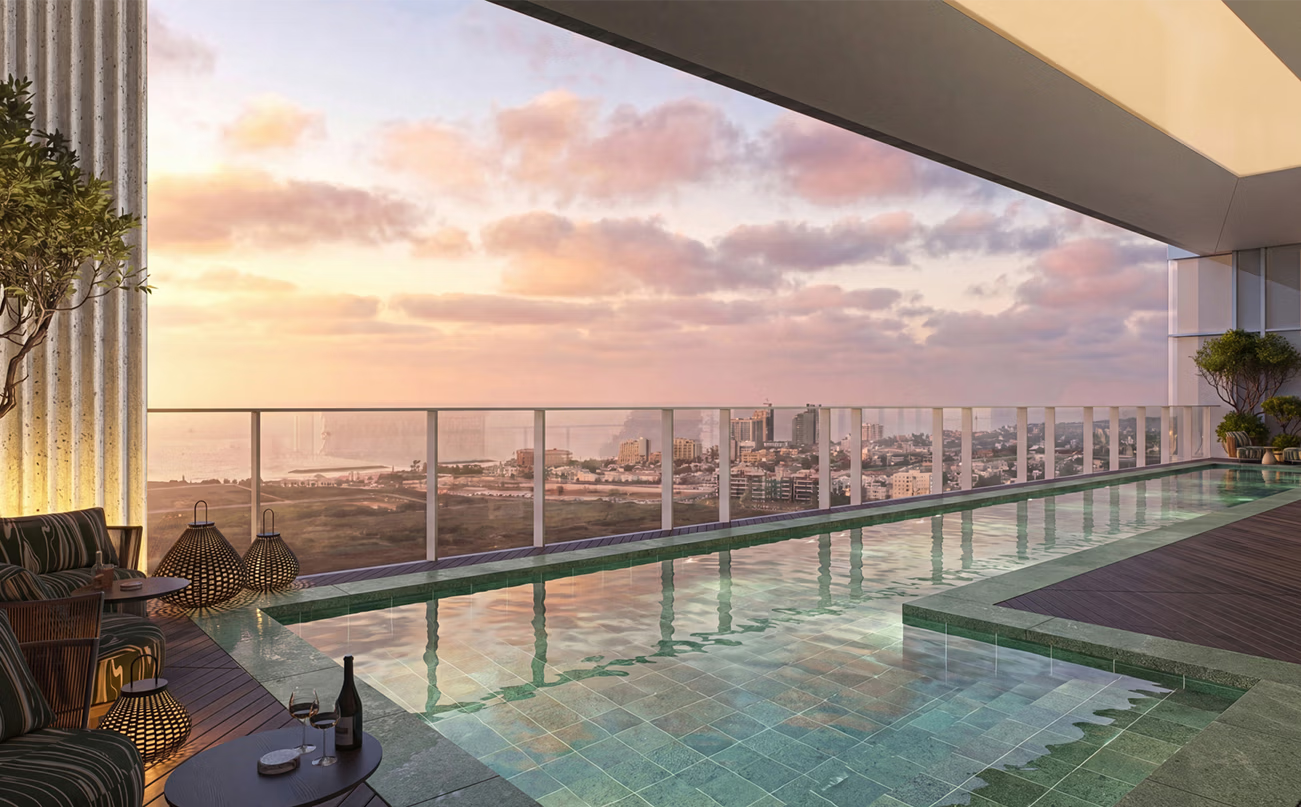
There are expensive neighborhoods in Israel, and then there is the strip of coastline around the Herzliya Marina, a few hundred meters of waterfront that functions less like a neighborhood and more like a closed international club with property deeds.
To understand why, it helps to look at what’s actually driving the demand. There are three main factors: limited supply, a buyer pool with significant purchasing power, and a lifestyle that genuinely lives up to the luxury image. Unlike some luxury developments that rely heavily on marketing, the appeal here is backed by the location and the lifestyle it offers.
Herzliya Pituach sits on the coast immediately north of Tel Aviv, and the marina itself, with its five-star hotels, yacht moorings, restaurant row, and direct beachfront, is the district's physical and symbolic center. Everything of value here radiates outward from that strip: the closer a property sits to the marina and the sea, the steeper the premium, often dramatically so within the space of a few streets.
The district functions as two distinct markets that happen to share a postal code. There's the marina and immediate seafront core, the actual subject of this profile, and there's the broader Herzliya Pituach area extending east toward the tech park, which is itself expensive by Israeli standards but a different, more residential proposition. This piece is specifically about the former: the streets where villas start where most Israeli apartments top out.
The single most important fact about the marina district is one that no amount of demand can change: there is almost no buildable land left. This is a narrow coastal strip, largely built out, bounded by the sea on one side and established low-density residential streets on the other. New supply arrives only through the occasional teardown-and-rebuild, a rare undeveloped parcel, or a boutique new development on a site that previously held something else entirely, the kind of project that comes to market once every few years rather than every few months.
This is a fundamentally different supply dynamic than Tel Aviv's, where new towers continue to add meaningful square footage to the market even in prime areas. In the marina district, a buyer isn't betting that scarcity will persist; they're observing a physical fact about a narrow strip of finished coastline with nowhere left to build. That's the foundation the entire pricing structure rests on, and it's also why comparisons to more elastic luxury markets elsewhere in the world often understate how firm this particular floor really is.
The marina district's buyer base is genuinely narrower than any other Israeli real estate market, and that concentration is a feature of the investment case, not an incidental detail. The typical buyer is one of a small number of types: senior technology executives relocating for or within a multinational's Israeli operations (the marina sits minutes from the Herzliya Pituach tech park, home to Israeli headquarters for several of the world's largest technology companies), successful Israeli entrepreneurs and founders who have had a liquidity event, international diplomatic personnel, and a smaller cohort of global ultra-high-net-worth buyers treating the property as one part of an international portfolio rather than a primary residence.
This buyer base behaves differently from a typical residential market in ways worth understanding before you compete with it. It is less sensitive to interest rate cycles than the broader Israeli mortgage-dependent market, since a large share of marina transactions are effectively all-cash or close to it. It is more sensitive to global capital flows, executive relocation cycles, and the health of the specific companies anchoring the nearby tech park than to Israeli domestic economic conditions. And it is a genuinely international buyer pool; property here competes, in the minds of the people buying it, with equivalent addresses on the French Riviera or in South Florida more than it competes with an apartment in central Tel Aviv.
Numbers in this district vary enormously by proximity to the water, floor level, and building vintage, which makes any single figure somewhat misleading, but the ranges are informative on their own.
Standard four-room apartments in quality Pituach buildings, not full sea-view, not the absolute prime strip, typically run ₪5.5–8 million, functioning as something close to an entry point into the district for a buyer who wants the address without the top-tier premium. Sea-view apartments and penthouses climb to ₪5–20 million, depending heavily on floor level and unobstructed sightlines. Villas, the district's signature asset type, generally start around ₪8 million and regularly exceed ₪15–30 million, with the true waterfront estates and architect-designed builds reaching well past that; recent transactions at the very top of this market have exceeded $50 million, among the highest residential sale prices ever recorded in Israel.
On a per-square-meter basis, marina-adjacent and beachfront product in Herzliya Pituach competes directly with Tel Aviv's most expensive addresses, Neve Tzedek and the Rothschild corridor, and in the case of true waterfront villas, can exceed them. Rental yields, by contrast, are among the lowest in the country: roughly 2.5% gross in Pituach against 3.5% in central Herzliya and higher still in the emerging markets. That gap is the clearest possible signal of what buyers here are actually purchasing: not income, but scarcity, prestige, and lifestyle.
One thing that sets the marina apart is that the lifestyle being marketed is actually fairly close to reality. You really can walk from a waterfront villa to a five-star hotel, the beach, or the restaurants along the marina. You can also keep a boat nearby and reach the Israeli offices of major international tech companies within minutes. In many luxury developments where you still need a car for almost everything, much of what you need in Herzilya Pituach is right outside your door.
There are some trade-offs, though. The marina is relatively small, so properties are closer together than you might expect at this price point. You also won’t get the same sense of established community you might find in some of Jerusalem’s Anglo neighborhoods. The area attracts a lot of international buyers and executives, so people tend to come and go. It’s more of a luxury lifestyle and business hub than a neighborhood where most residents are planning to put down roots for decades.
There are some clear advantages to the marina market, but it also comes with risks that are easy to overlook when you focus on the lifestyle and price growth. The market is small and highly specialized, so buyers need to look beyond the headline numbers and understand what they’re actually taking on.
At the very top end of the market, only a small number of villas change hands each year. That can work in a seller’s favor because there aren’t many comparable sales setting lower prices. But it can also make things difficult for a buyer who needs to sell within a specific timeframe. There may simply be very few people looking for that exact type of property at that particular moment.
There are really two layers of concentration here. The first is the marina itself, and the second is its connection to Israel’s tech sector. A large part of the demand comes from senior executives and wealthy professionals who want to live close to both the coast and the country’s main business hubs. If the tech sector slows down or these buyers start favoring other areas, the marina could feel the impact more than the wider Israeli property market.
With so few comparable sales, pricing isn’t always straightforward. Many marina transactions also happen privately rather than through public listings, so published price-per-square-meter figures are best viewed as a rough guide rather than an exact benchmark.
Two villas that look similar on paper can sell for very different prices depending on their condition, renovations, exact location, and even the circumstances of the buyer and seller. That makes an independent valuation particularly important in this part of the market.
International buyers also need to think about currency risk. If you’re converting dollars, euros, or pounds into a property priced in shekels, even a relatively small currency movement can translate into a significant amount of money at this price level. It’s something worth factoring into the purchase from the beginning rather than treating it as an afterthought.
The marina district is not a market we'd recommend to a first-time Israeli property buyer, regardless of budget, and we say so plainly to clients who arrive asking about it as an entry point. It's the right conversation for someone who has already established their footing in Israeli real estate, understands the illiquidity trade-off they're accepting, and is buying for reasons that go beyond yield: a primary or secondary residence tied to an executive relocation, a trophy asset within a broader international portfolio, or a long-term family property in a location whose scarcity value is unlikely to erode.
Finding a property in the marina usually isn’t the difficult part. The district is small, and most available villas quickly move through the international brokers working in the area.
The more important work happens before an offer is made. That means getting an independent valuation when there are so few comparable sales, making sure the purchase and financing are structured properly for a non-resident or newly arrived buyer, and knowing when to walk away from a property where the asking price reflects more optimism than the underlying value.
That’s where we come in. We help clients look at the numbers, the risks, and the property itself before they commit to a purchase.
.svg)


.avif)


.svg)
.png)